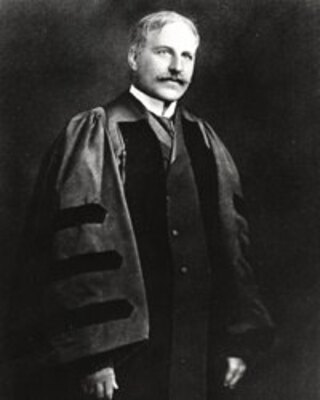
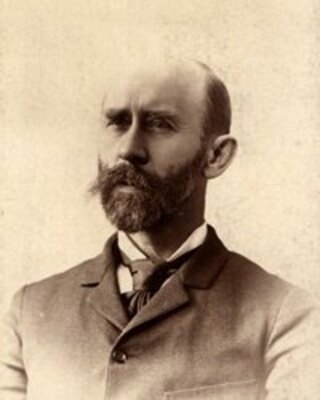
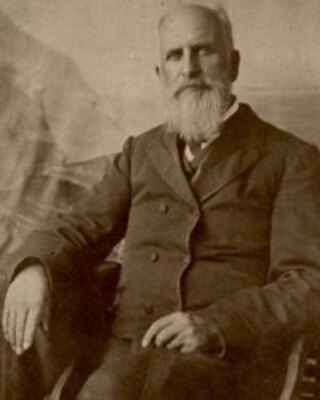
-
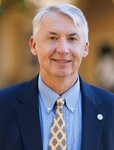
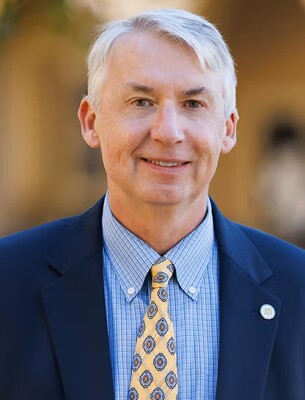
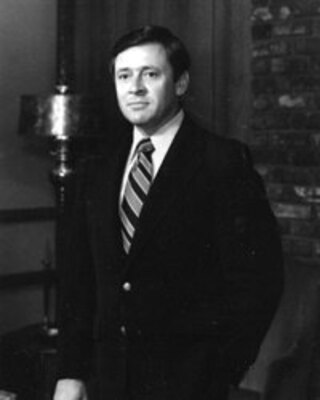
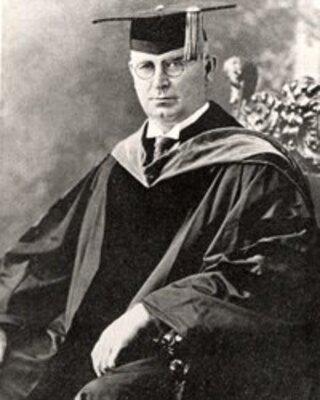
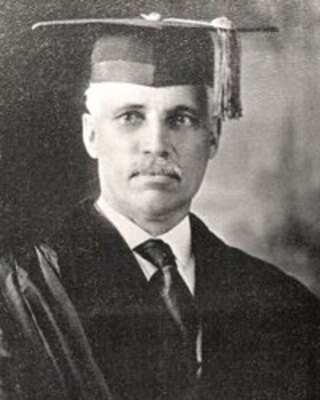
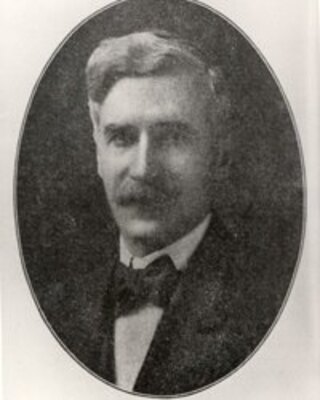
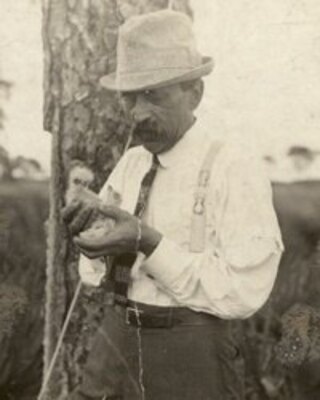
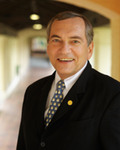
Grant Cornwell (2015-2025)
Rollins College Archives and Special Collections
Grant Cornwell was named Rollins’ fifteenth president following eight years as president of The College of Wooster in Ohio, where he championed initiatives in diversity and global engagement, collaborative research, and experiential learning. Prior to his Wooster presidency, Cornwell served as vice president of the university and dean of academic affairs at St. Lawrence University in Canton, New York, for five years. For the previous sixteen years, he had been a member and chair of St. Lawrence’s philosophy department and dean of St. Lawrence’s hallmark First-Year Program. The curiosity and exploration at the core of liberal learning remained central to his approach to higher education throughout his career, including his time at Rollins.
Arriving at Rollins in 2015, Cornwell grew Rollins’ reputation as a distinguished liberal arts college. Under his leadership, applications, enrollment, and the diversity of the student body reached the highest levels in college history. He engaged the entire college community in an extensive strategic planning process, including an ambitious capital projects plan that changed the face of the campus as facilities were constructed or renovated to support programs focused on student success in the 21st century. He led the transformation of the Hamilton Holt School evening program to meet the needs of a new generation of learners. He advanced the College’s commitment to excellence in teaching by relaunching the Endeavor Center for Faculty Development. He also shepherded an ambitious fundraising campaign that raised over $290 million, anchored by the single largest outright gift—$40 million—in Rollins’ history.
Cornwell was nationally recognized for his work in defining liberal learning in a global environment and continued to write regularly about freedom, democracy, diversity, and global citizenship. Grant was also dedicated to keeping his finger on the pulse of higher education’s issues and movements. A past member of the board of directors of the National Association of Independent Colleges and Universities (NAICU) and former chair of the Association of American Colleges and Universities’ (AAC&U) Presidents’ Trust, Grant also served on the Board of the AAC&U, the Council on Foreign Relations’ Global Literacy Advisory Board, the American Council on Education’s Commission on International Initiatives, among other critical advocacy organizations in higher education.
Grant is an accomplished author. He co-authored “An Education for the Twenty-First Century: Stewardship of the Global Commons,” which appeared in AAC&U’s Liberal Education, and “On Purpose: Liberal Education and the Question of Value” from the book Higher Education and Society, to name just a few of the highly acclaimed works from his long career of scholarship.
Cornwell hold bachelor’s degrees in philosophy and biology from St. Lawrence University and master’s and doctoral degrees in philosophy from the University of Chicago. In 2017, he was awarded an honorary Doctor of Humane Letters degree from The College of Wooster, and in 2020, an honorary Doctor of Humane Letters degree from St. Lawrence University. In addition to holding the George D. and Harriet W. Cornell Chair of Distinguished Presidential Leadership, Cornwell was a member of the Rollins faculty during his presidency, serving as a professor of philosophy.
-
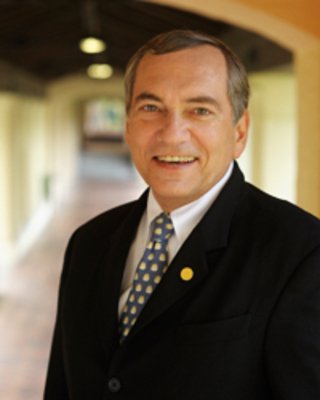
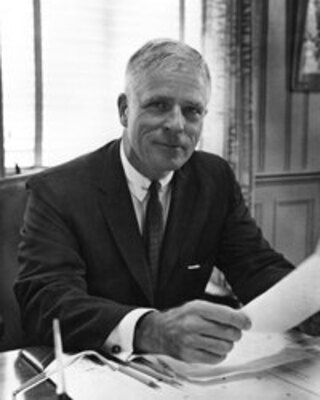
Lewis Duncan (2004-2014)
Rollins College Archives and Special Collections
Lewis M. Duncan is a physicist, academic leader, and the fourteenth president of Rollins College serving in that distinguished role from 2004 to 2014. During his decade-long tenure, he guided the College to sustained national recognition, including maintaining its top ranking among regional universities in the South by U.S. News & World Report. Under his leadership, Rollins became a leading producer of Fulbright Scholars, expanded international enrollment, launched new academic programs that increased enrollment and the college’s financial health, and significantly increased endowment and fundraising dollars.
Duncan oversaw transformative projects at Rollins, including the expansion of the Archibald Granville Bush Science Center and the creation of The Alfond Inn, a hotel whose proceeds fund student scholarships. He also created dramatically grew the curriculum offered at Rollins, creating an entirely new college -- The College of Professional Studies -- to expand applied science offerings for both traditional and non-traditional student learners.
Duncan’s presidency was marked by a strong commitment to community engagement, culminating in the College’s designation as a Changemaker Campus by Ashoka U and recognition by federal agencies for service learning. He also founded the Winter Park Institute, a distinguished speaker series that enriched intellectual life on campus and in the broader community.
Duncan holds bachelor’s degrees in physics and mathematics, as well as a master’s and Ph.D. in space physics, all from Rice University. An internationally recognized expert in space plasma physics and radiophysics, he has remained active in research and teaching throughout his career. He is also known for his work on the societal and ethical implications of emerging technologies and has contributed to national conversations on science policy, educational reform, and international security.
A member of honor societies including Phi Beta Kappa and Sigma Xi, Duncan is also an Associated Fellow of the United Nations Institute for Training and Research and the recipient of the Alan Berman Research Publication Award from the Naval Research Laboratory. After his time at Rollins, Duncan served as Provost of the U.S. Naval War College, the top civilian academic post at a premier institution for military education.
-
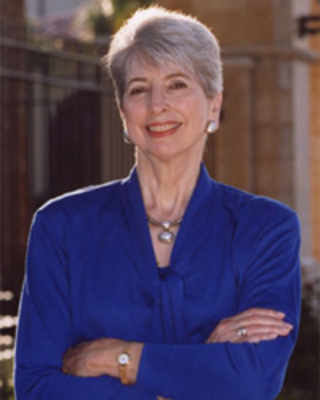
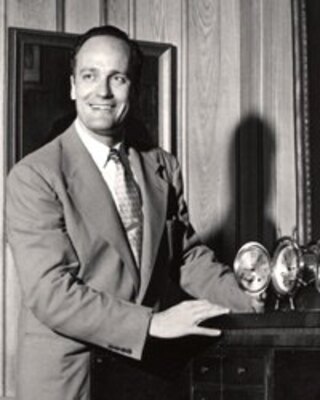
Rita Bornstein (1990-2004)
Rollins College Archives and Special Collections
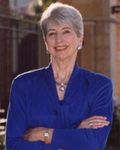
Rita Bornstein (1935-2024) made history in 1990 when she became the thirteenth—and first female—president of Rollins College. Over her 14-year tenure, she not only elevated the college’s national standing but also redefined what it meant to be a college president through her visionary leadership, fundraising acumen, and deep commitment to community engagement.
Born in New York City in 1935, Bornstein’s path to leadership was anything but conventional. After an early departure from the University of Chicago, she moved to Los Angeles, married young, and later returned to Florida as a single mother. She earned her B.A. and M.A. in English Literature from Florida Atlantic University and a Ph.D. in Educational Leadership from the University of Miami. Her early career included teaching high school English and directing the U.S. Office of Education Technical Assistance Center, where she helped implement Title IX across the Southeast.
Before arriving at Rollins, Bornstein served as vice president for development at the University of Miami, where she led one of the most successful fundraising campaigns in higher education at the time. This experience laid the foundation for her transformative presidency at Rollins.
Under Bornstein’s leadership, Rollins experienced a renaissance. The college’s endowment grew from $39 million to over $260 million—a sevenfold increase. She launched and completed “The Campaign for Rollins,” raising $160.2 million to support scholarships, faculty, and facilities. Her tenure saw the construction and renovation of 25 buildings, including the Cornell Campus Center and the McKean Gateway, which symbolized a new era of openness and connection between the college and the Winter Park community.
Academically, Bornstein championed liberal education and innovation. She introduced new programs, including Sustainable Development and the Rollins College Conference for first-year students (RCC), and helped the college rise from sixth to first place in U.S. News & World Report’s rankings of regional universities in the South. She also established 16 new endowed chairs and led efforts to improve faculty compensation and student academic standards.
Bornstein’s presidency was marked by a strong emphasis on civic engagement. She encouraged service learning and community partnerships, leading to Rollins being honored with the Winter Park Chamber of Commerce’s Citizen of the Year Award in 1994 and naming Bornstein its Citizen of the Decade in 2004.
Beyond administration, Bornstein was a prolific scholar and author. She delivered over 100 presentations and wrote extensively on higher education. Her leadership style—described as both formidable and deeply empathetic—earned her national recognition, including the CASE Chief Executive Leadership Award and the Summit Award for lifetime achievement in fundraising.
After retiring in 2004, Bornstein remained active as the George D. and Harriet W. Cornell Professor of Philanthropy and Leadership Development at Rollins. She also served on numerous nonprofit boards and continued to advocate for education and community development.
Rita Bornstein passed away in January 2024 at the age of 88 after a long battle with Parkinson’s disease. Her legacy endures not only in the physical and academic transformation of Rollins College but also in the lives of the countless students, colleagues, and community members she inspired.
-
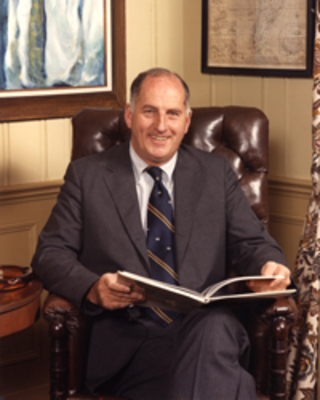
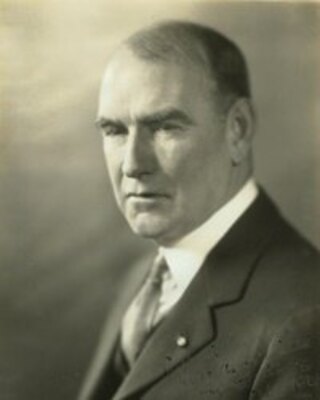
Thaddeus Seymour (1978-1990)
Rollins College Archives and Special Collections
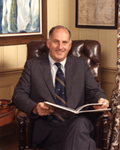
Thaddeus Seymour (1928-2019) served as the twelfth president of Rollins College from 1978 to 1990, leaving an indelible mark on the institution through his visionary leadership, commitment to liberal arts education, and deep engagement with the Winter Park community.
Born on June 29, 1928, in New York City, Seymour was the son of Whitney North Seymour, a prominent attorney and president of the American Bar Association. He pursued his undergraduate studies at Princeton University and the University of California, Berkeley, before earning his master’s and Ph.D. in 18th-century English literature from the University of North Carolina. His academic career began at Dartmouth College, where he taught English and later became Dean of the College. In 1969, he assumed the presidency of Wabash College in Indiana, a role he held for nine years before coming to Rollins.
At Rollins, Seymour quickly set a bold vision for the college’s future. He launched his presidency with a goal for the 1985 Centennial: “To know ourselves and be known by others as the finest small college in the Southeast, standing among the finest small colleges in the country.” To achieve this, he emphasized a return to the college’s liberal arts roots, strengthened academic programs, and increased faculty salaries.
Under his leadership, Rollins introduced a major in classics, launched the Master of Liberal Studies program at the Hamilton Holt School, and secured AACSB accreditation for the Crummer Graduate School of Business. Seymour was also a master fundraiser. He led efforts that resulted in the construction of the Olin Library and the Cornell Social Sciences Building, significantly enhancing the college’s infrastructure.
His presidency was marked by campus engagement, especially with the student body. He reinstated Fox Day, a beloved campus holiday, and led the college’s Centennial Celebration in 1985, which included a community portrait, fireworks, and national recognition on Good Morning America. As a fierce advocate for the arts and creative expression, Seymour even defended students’ right to perform the controversial play Equus play – he appeared in court to support them, demonstrating his commitment to academic freedom. Known for his storytelling and sleight-of-hand tricks, “Thad” as he became known, brought a sense of fun and humanity to the role.
Beyond campus, Seymour and his wife Polly became pillars of the Winter Park community. They were actively involved in organizations such as the Winter Park Public Library and Habitat for Humanity. Their civic contributions earned them the Winter Park Citizens of the Year award in 1997.
After stepping down in 1990, Seymour joined the Rollins English Department, returning to his roots as a teacher. He received an honorary degree from Rollins and was also awarded honorary doctorates from Wilkes College, Butler University, and Indiana State University.
Thaddeus Seymour passed away in 2019 at the age of 91, but his legacy endures. He is remembered not only as a transformative college president but also as a beloved teacher, mentor, and community leader whose life embodied the values of service, scholarship, and joy.
-
Jack B. Critchfield (1969-1978)
Rollins College Archives and Special Collections
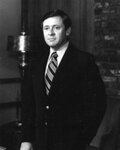
Jack B. Critchfield was born on May 23, 1933 in Rockwood, Pennsylvania, who earned his BS in Education from Slippery Rock State University and his MA and Ed.D. from University of Pittsburgh. In 1968, after a summer-long search, Jack Critchfield was selected to succeed Hugh McKean as the eleventh president of Rollins College. At the time, Critchfield was associate provost at the University of Pittsburgh. Despite lacking experience in college presidencies or fundraising, Critchfield was chosen for his intelligence, charisma, and youthful energy – he became President at the young age of 36.
One of Critchfield’s early initiatives was to reform college governance. He led efforts to establish a college senate, headed by faculty officers, and created the role of Provost. These changes shifted academic authority from the president to the faculty and marked a move toward a more formal governance model. During the tenure of President Critchfield, Black Student Union was formed in the early 1970s, and Rev. Jesse Jackson visited Rollins for the Black Awareness Week in 1973. In addition, Business Administration and Area Studies majors were added to the college curriculum, and Central Florida School for Continuing Studies was renamed to Rollins School of Continuing Education, along with a new program of master’s in criminal justice.
With academic responsibilities delegated, Critchfield focused on fundraising. He established the college’s first Development Office, and he himself excelled at building relationships with local business leaders to secure valuable support for the college. His most notable achievement was strengthening ties with the Alfond family, whose financial contributions led to the creation of the Alfond Athletic Scholarship and the construction of the college’s first swimming facility, the Alfond Pool. In other areas of campus architecture, O’Neal House was razed, Lyman Hall was burned down, the New Hall was renamed Hugh McKean Hall, the New Women’s Dormitory was renamed Ward Hall, the Morse Gallery of Arts was renovated into the Cornell Fine Arts Museum, in addition to several new construction projects such as the Cornell Fine Arts Center, Hauck Hall, Keene Hall, and U. T. Bradley Boathouse.
In 1977 he announced he would be leaving the College to become CEO of Florida Power Company. The 1977–78 yearbook, The Tomokan, was dedicated to him in appreciation of his service. In addition, to honor his services to the College, Rollins also established the annual Jack Critchfield Grant, which was awarded exclusively for faculty research projects, both domestic and international.
-
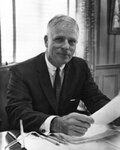
Hugh F. McKean (1951-1969)
Rollins College Archives and Special Collections
Hugh Ferguson McKean (1908-1995), the tenth president of Rollins College, played a defining role in shaping both the College and the broader Winter Park community throughout the mid-20th century. A Rollins graduate (Class of 1930), McKean was an artist, educator, and philanthropist whose leadership helped anchor the College in a legacy of art, beauty, and civic responsibility.
Born in Pennsylvania in 1908, McKean moved to Central Florida as a child and later returned to Rollins as an art instructor in the 1930s. His academic and artistic training included studies at prestigious institutions in the U.S. and France. In 1945, he married Jeannette Genius McKean, granddaughter of industrialist and major Rollins benefactor Charles Hosmer Morse. Together, the McKeans would become stewards of the arts and ecology in Winter Park, contributing significantly to its cultural identity.
Jeannette founded the Morse Gallery of Art in 1942, and Hugh served as its director for decades. Their shared passion for the works of Louis Comfort Tiffany led to a vast collection of Tiffany glass and art, now housed at the Charles Hosmer Morse Museum of American Art. Hugh would later author several books on Tiffany’s work and philosophy.
McKean became president of Rollins in 1951, following a turbulent period for the College. He guided the institution through nearly two decades of steady growth, during which the College balanced its budget, expanded enrollment, constructed nine major buildings, and more than quadrupled its endowment. A pivotal moment in McKean’s tenure came in 1965, when Rollins College was formally integrated. This decision, made under his leadership, marked a significant step forward in realizing Rollins’ values of equity, access, and community.
Beyond campus, McKean was a champion of conservation. He and Jeannette lived at Wind Song, a lakeside estate surrounded by preserved natural Florida habitat. They were active in maintaining Winter Park’s environmental integrity and architectural charm.
Known for his humility, creativity, and commitment to education, McKean remained deeply involved with Rollins even after stepping down in 1969, later serving as Chancellor and Chairman of the Board. He passed away in 1995 leaving an indelible mark on Rollins and Winter Park. To commemorate his contributions to the College, Rollins Student Association launched the Hugh McKean Award, to be selected by students and given to a faculty member annually, “who has given outstanding services to the students both in and out of the classroom.” In addition, Rollins also established the Hugh and Jeannette McKean Grant to enable a faculty member to undertake a research project, an artistic work, or a teaching-related project that will contribute to the educational mission of the College, which is a $15,000 cash award designed to provide an "once-in-a-lifetime opportunity for a faculty member to accomplish what would otherwise be deemed impossible in a single professional career."
-
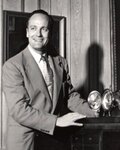
Paul Wagner (1949-1951)
Rollins College Archives and Special Collections
Following Hamilton Holt’s long and transformative tenure, Paul Wagner was appointed the ninth president of Rollins College in 1949. Young and energetic, Wagner had previously been an executive at Bell & Howell and was hailed by Collier’s magazine as a “Boy Wonder.” A firm believer in the promise of instructional technology, he aimed to make Rollins a national leader in audio-visual education. However, his vision clashed with the College’s established culture. Many faculty and students saw his approach as overly businesslike and a sharp departure from Holt’s student-centered, discussion-based model.
Early in his presidency, Wagner made several controversial decisions, including eliminating the College’s football program, which drew strong campus opposition. Tensions peaked in 1951 when, facing a projected deficit, Wagner—backed by the Board of Trustees—terminated 28 faculty members, including 19 full-time professors. The mass firings triggered a wave of protests, meetings, and student marches, gaining attention in national news outlets.
The crisis deeply divided the campus, and just two years into his tenure, Wagner’s presidency ended abruptly. In May 1951, the Board of Trustees dismissed him and appointed Hugh F. McKean as the tenth president of Rollins College.
Paul Wagner was born in Chicago, IL. on September 10, 1917. After leaving Rollins, he became a pioneer in the public relations profession. As a Senior Executive, he led the global education practice of Hill and Knowlton, the world's largest public relations organization. In the seventies, he founded his own public relations company--NPO Taskforce--to expand the work solely in the non-profit area. On December 23, 2015, Wagner passed away in Sag Harbor, NY.
-
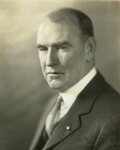
Hamilton Holt (1925-1949)
Rollins College Archives and Special Collections
Journalist, social reformer, and educational innovator, Hamilton Holt left an indelible mark on Rollins College during his 24-year term as the eighth President of Rollins College. He brought with him a national reputation as editor of The Independent, a progressive weekly magazine, and a fervent advocate for peace, civil rights, and democratic ideals.
Born in Brooklyn, New York, in 1872, Holt earned his undergraduate degree from Yale University in 1894 and pursued graduate study at Columbia University. In 1897, he joined The Independent, a publication founded by his grandfather, and rose to editor and owner by 1913. Under his leadership, the magazine merged with Harper’s Weekly and became a powerful voice for progressive causes. Holt used the platform to amplify the lives of ordinary Americans through a pioneering series of personal narratives that became known The Life Stories of Undistinguished Americans (1906). He was also a founding member of the NAACP and remained deeply committed to racial equality and international cooperation.
Holt’s influence extended globally. He participated in the 1907 Hague Peace Conference and the 1919 Paris Peace Conference, strongly supported the League of Nations, and was decorated by multiple foreign governments for his peace efforts. He ran for the U.S. Senate in 1924 as a Democrat but was defeated.
That same year, Holt accepted the presidency of Rollins College, recruited by trustee and author Irving Bacheller. Though lacking formal academic administration experience, Holt brought a bold educational vision rooted in student engagement and faculty mentorship. He implemented the “conference plan,” a student-centered approach emphasizing one-on-one dialogue over traditional lectures. This method limited class size, emphasized teaching over research, and sought to cultivate students' intellectual and personal growth.
Holt elevated Rollins’ national profile by organizing the Rollins Educational Conference in 1931, which hosted philosopher John Dewey, and introducing innovative curricular reforms. He also founded the Animated Magazine, a live annual event that brought national thought leaders to campus. His tenure saw a dramatic expansion of campus life, including architectural shifts to a Spanish Mediterranean style – which dominates campus architecture still today -- and the establishment of enduring cultural organizations on campus like the radio station WPRK and the Rollins Theatre.
Though widely admired, Holt’s presidency was not without controversy. His dismissal of faculty member John Andrew Rice and others over pedagogical and ideological conflicts sparked national debate about academic freedom and contributed to the founding of Black Mountain College. Later, Holt’s progressive values were tested visibly on multiple occasions. In 1947 racial tensions in the local Central Florida community forced the cancellation of a football game that was intended to allow for integrated play. In 1948, Holt clashed with the Board of Trustees over awarding an honorary degree to educator Mary McLeod Bethune, a national leader in higher education. Despite their opposition, Holt ensured the degree was granted as his final act before retiring in 1949—making Rollins the first U.S. college to honor an African American woman in this way.
Despite his public struggles, Holt’s transformative leadership arguably redefined Rollins’ identity and put it on the map as a forward-thinking and top-tier liberal arts institution.
On April 26, 1951, two years after his retirement from Rollins, Holt passed away in Woodstock, Connecticut. To honor his legacy at Rollins, the Board of Trustees established the Hamilton Holt Award, to be given to “the famous or the unknown… It must, however, always be given to those who have in some way shown that any man anywhere, guided by truth and armed with honesty, can find his own destiny.”
-
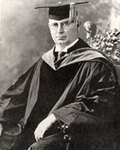
William Weir (1924-1925)
Rollins College Archives and Special Collections
William Clarence Weir became the seventh president of Rollins College on August 1, 1924. His appointment followed an extensive search by a special committee of the Board of Trustees. At the time of his selection, Weir was president of Pacific University in Oregon, an institution he had led since 1922. He resigned from that post to begin his presidency at Rollins during a period of transition and financial uncertainty.
Born in Indiana on August 1, 1874, Weir earned both his B.S. and M.S. degrees from Borden College in 1895 and 1896, respectively. He pursued additional studies at Louisville University and was later awarded an honorary Doctor of Laws from Fairmont College in Kansas in 1923. In 1896, he married Nettie L. Biery of Scottsburg, Indiana.
Weir began his education career as a teacher and principal in Indiana and Washington. During World War I, he joined the Training Camps Activities Commission, contributing to the welfare and morale of soldiers in Western camps. After the war, he became a community organizer and extension lecturer for the State Normal School in Bellingham, Washington, eventually heading to the Department of Public Health and Hygiene. His focus on educational outreach and teacher development throughout the state earned him a strong reputation as a leader in public service and academic administration.
As president of Pacific University, Weir significantly increased the institution’s financial resources and visibility, raising over $200,000 and securing major gifts, including a $110,000 endowment for a Chair of American History and Patriotism. He also led efforts to secure national accreditation, placing the college among those recognized by the New York Regents and the U.S. Commissioner of Education.
At Rollins, Weir was known for his ecumenical leadership and his ability to bridge denominational divides. His presidency marked renewed efforts to unite support from both Presbyterian and Congregational bodies under the Rollins Union Plan. Religious leaders praised his inclusive and conciliatory style, with one describing him as a "fine Christian gentleman" capable of harmonizing diverse viewpoints.
Weir’s priorities for Rollins included increasing the college’s endowment to at least $1 million, ensuring operations remained on a cash basis, and constructing new campus facilities. Though his presidency was brief—lasting only one year—he played a critical role in setting the stage for institutional stability and broader church support in a pivotal era of the college’s history. On November 29, 1942, William Weir passed away in Orlando, Florida.
-
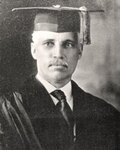
Robert Sprague (1923-1924)
Rollins College Archives and Special Collections
Robert Sprague, who had previously served as Dean at Rollins College, stepped in as Acting President from 1923 to 1924, as the College’s sixth president during a particularly challenging period in the college’s history. Facing severe financial difficulties and increasing competition from Florida’s expanding public college system, Sprague sought innovative solutions to ensure the institution's survival and growth.
One of his most ambitious proposals involved forming a partnership with the Southern Presbyterian Church, which had been exploring plans to establish a college in central Florida. Under Sprague’s plan, the Florida Presbyterian Synodical Committee would contribute $500,000 to Rollins’s endowment and construct several new buildings on campus. In exchange, the Presbyterians would be granted the right to appoint half of the college’s Board of Trustees.
This proposal, however, sparked concern from the Florida Congregational Association, which objected to the significant shift away from the college’s Congregational roots. In response, Sprague suggested a compromise—a joint governance model he called “Rollins Union,” in which both Presbyterians and Congregationalists would share control of the institution. He argued that this arrangement could establish Rollins as a leading center of Christian liberal education in the South.
Although the Congregational Association agreed to the union, the Presbyterians ultimately withdrew their support, abandoning the plan. Sprague had campaigned vigorously for the proposal, and its collapse significantly weakened his position. Without a path forward, the Board of Trustees began searching for a new president.
-
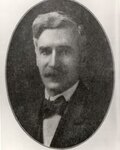
Calvin H. French (1917-1919)
Rollins College Archives and Special Collections
Calvin H. French was a well-educated minister and college administer who served as the fifth president of Rollins College from 1917-1919.
Born on June 13, 1862, in Wellsville, Ohio, to Rev. Charles P. and Mary J. French. His early years were spent in Illinois after his family moved to LaSalle County when he was eight. French received his primary education in local public schools before graduating from Streator High School in 1883. He then attended Lake Forest University, where he earned a Bachelor of Arts degree in 1888 and later a Master of Arts from the same institution. Pursuing a religious vocation, French enrolled in Union Theological Seminary in New York City and completed his divinity studies in 1891. That same year, he was licensed and ordained.
French served as pastor of the Presbyterian Church in Scotland, South Dakota, from 1891 to 1898. During his final year there, he also acted as principal of its school, Scotland Academy. When the Academy merged with Pierre University, forming Huron College, French was appointed as president. Over the following years, he was instrumental in building the college’s infrastructure and raising a large endowment.
French then assumed the presidency of Rollins College in 1917, a challenging period marked by financial instability and declining enrollment in the wake of World War I. In 1919, he presented a bold plan to the Board of Trustees aimed at transforming Rollins from a struggling college into a major university supported by a $3 million endowment. French tied his future at Rollins to the acceptance of this ambitious proposal, warning that he would resign if the Board did not approve it.
The Board, however, was unprepared to endorse such a large-scale campaign given the uncertain post-war climate and ongoing financial difficulties. They rejected French’s plan and accepted his resignation. Following his departure, the Board appointed previous Rollins President Goerge Morgan Ward as acting president while searching for a new campus leader.
On November 21, 1934, French passed away in Hastings, Nebraska.
-
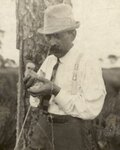
William Blackman (1902-1915)
Rollins College Archives and Special Collections
William Fremont Blackman (1855–1932) was a distinguished minister, scholar, and educator who served as the third president of Rollins College from 1903 to 1915. Born on September 26, 1855, in North Pitcher, New York, he was the son of Orpah (Freeman) and John Smith Blackman.
Blackman’s academic background was broad and impressive. He earned a Bachelor of Arts degree from Oberlin College, a Bachelor of Divinity from Yale Divinity School, and a doctorate from Cornell University, graduating magna cum laude. His academic pursuits also led him abroad, where he studied at Berlin University’s Royal Statistical Bureau and the Collège de France in Paris. In 1910, he was awarded an honorary Doctor of Laws degree from the University of Florida.
Following his graduation from Yale, Blackman served as a Congregational minister in several churches across Ohio, Connecticut, and New York. In 1880, he married Lucy Worthington, and together they had three children: Berkeley, Worthington, and Marjorie. By 1893, Blackman had joined the Yale faculty as a professor of Christian ethics and later lectured on social philosophy and ethics, as well as editing the Yale Review.
In 1902, Blackman was elected president of Rollins College and officially began his term in 1903. During his 13-year presidency, he emphasized academic excellence, advocating for high standards in scholarship and teaching. He raised the college’s first permanent endowment and secured funding for the campus’s first three fireproof buildings—a library, science hall, and men’s dormitory. Blackman also played a pivotal role in freeing Rollins from its denominational ties to the Congregational Church and pursued accreditation at both the state and national levels. In addition to his administrative duties, he taught courses in sociology, politics, and economics.
After resigning in 1915, Blackman purchased Wekiwa Ranch near Sanford and became deeply involved in civic and environmental causes across Florida. A strong advocate for the state’s development, he served as the founding president of the Bank of Winter Park and led the Florida Conference of Charities and Corrections. His passion for conservation led to leadership roles in the Florida Audubon Society and the Florida State Chamber of Commerce’s Conservation Committee. He campaigned for protective legislation and promoted public awareness of conservation issues.
Blackman was also an author, publishing The Making of Hawaii: A Study in Social Evolution (1899), A History of Orange County (1927), and numerous other monographs. He was named president emeritus in 1927 and passed away in Winter Park on August 9, 1932. His funeral was held at Knowles Memorial Chapel on the Rollins campus, a fitting tribute to a man whose vision helped shape the college and community. To recognize his services to Rollins, the Board of Trustees established William Fremont Blackman Medal to honor one "whoever maintained that it should be the ideals of quality, high standards and fineness of result which should distinguish Rollins among its peers."
-
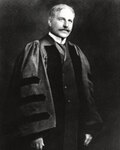
George Morgan Ward (1896-1902)
Rollins College Archives and Special Collections
George Morgan Ward, who served twice as president of Rollins College—first from 1896 to 1902, and again from 1916 to 1922—was a clergyman and educator whose leadership helped stabilize and shape the college during two challenging periods in its early history. Born on May 23, 1859, in Lowell, Massachusetts, Ward was the son of Sullivan Lawrence Ward, a dentist, and Mary Frances Morgan Ward. He was a descendant of William Ward, a soldier in the King Philip’s War.
After attending Lowell High School, Ward studied at Harvard and later graduated from Dartmouth College in 1882. He pursued law, passed the bar, and briefly worked in contracting before turning to ministry and education. He served as general secretary of the United Society of Christian Endeavor and editor of its magazine, The Golden Rule, before resigning due to health issues. He later studied at Andover Theological Seminary and Johns Hopkins University.
In 1896, Ward accepted the presidency of Rollins College, which was still recovering from Florida’s devastating Big Freeze of 1895. Despite financial hardship, he helped keep the institution afloat and broadened its religious affiliation from Congregationalist to interdenominational. During his first tenure, the faculty grew significantly, and new buildings were added to campus. He married Emma Merriam Sprague in the same year.
Ward left Rollins in 1902 to become president of Wells College in New York but returned in 1916 for a second term. Serving without pay in these trying years, he worked tirelessly to reduce the college’s debt and led a successful campaign to increase the endowment by $500,000. He retired for the final time in 1922 and became pastor of Elliot-Union Church in Lowell, Massachusetts.
George Morgan Ward died on December 28, 1930, in Palm Beach, Florida. His memorial service at Rollins featured music and tributes, including remarks by President Hamilton Holt, who called him “a great leader and a steadfast friend.” To honor his legacy of services, Rollins Board of Trustees established the George Norgan Ward Medal, to be awarded to “those who have exemplified the ideals of for which President Wad stood and the sacrifices which he made in the cause of Christian education.”
-
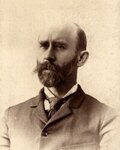
Charles Fairchild (1893-1895)
Rollins College Archives and Special Collections
Charles Grandison Fairchild (1838–1933) served as the second president of Rollins College from 1893 to 1895, bringing to the role a distinguished background as an educator, fundraiser, and Civil War veteran. Born in Birmingham, Michigan, he was the son of Jairus Kent and Maria Hall (Baldwin) Fairchild. His early academic pursuits were interrupted by three years of military service during the American Civil War. Following the war, he completed his undergraduate studies at Oberlin College in 1869 and graduated from Oberlin Theological Seminary. Though ordained in the Congregational Church, Fairchild chose to devote his life to education rather than the pulpit.
His professional career included leadership roles at several educational institutions. He served as headmaster of the New Jersey State Normal School (now The College of New Jersey) from 1870 to 1871 and later worked alongside his father, then president of Berea College in Kentucky. There, Fairchild not only taught but also spearheaded fundraising efforts, securing resources for campus development and establishing the college’s first physics department. Notably, in 1876, he installed the first telephone in the state of Kentucky at Berea.
From 1881 to 1893, Fairchild was a professor and financial officer at Oberlin College, where his efforts helped finance six new campus buildings, including the conservatory of music. In 1893, he accepted the presidency of Rollins College. Despite challenges such as economic depression and the devastating impact of the "Great Freeze" 1894 when the local citrus industry economy was all but halted, Fairchild oversaw enrollment growth at Rollins. He also supported student engagement, launching The Sandspur, the College’s student newspaper. His leadership helped stabilize the young institution during a vulnerable period, and his commitment to liberal education contributed to the foundations of Rollins' identity. However, his tenure was one of the briefest in college history. In March 1995, Fairchild resigned from Rollins presidency, as he was unable to improve the fragile financial situation of the young frontier institution that was further exacerbated by the national depression of the early 1890s and the great freezes of 1894-95.
He later served on New York City's Board of Education (1904–1918). A passionate advocate for education, Fairchild was known for his warmth, intelligence, and commitment to academic ideals. He was married to Adelaide Frances Dean, with whom he had nine children. He passed away in 1933 in Roslyn Heights, New York.
-
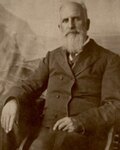
Edward P. Hooker (1885-1892)
Rollins College Archives and Special Collections
Edward Payson Hooker (1834–1904) was the founding president of Rollins College and a deeply committed educator, pastor, and community leader. Born in Poultney, Vermont, Hooker descended from distinguished lineage, including the colonial theologian Thomas Hooker and Revolutionary War veterans. He received a classical education, studying Latin, Greek, and mathematics at Castleton Seminary before earning his bachelor’s and master’s degrees from Middlebury College, where he later also received a doctorate.
Ordained in 1861 after graduating from Andover Theological Seminary, Hooker served as a Congregational minister in Massachusetts and Vermont. In 1883, he moved to Winter Park, Florida, seeking improved health in the warmer climate. Soon after, he became a driving force behind the founding of Rollins College. As a charter trustee, college pastor, and its first president, Hooker helped shape the vision and values of Florida’s first recognized institution of higher learning.
Hooker led Rollins from its opening in 1885 until his resignation in 1892, teaching courses in philosophy, ethics, logic, and the Bible. He emphasized a classical liberal arts education modeled on northern colleges and introduced progressive academic practices, including daily classroom participation in place of traditional exams. He also helped establish the school’s gymnasium and physical education curriculum, recognizing the importance of student wellness.
Under Hooker’s leadership, Rollins weathered the early challenges of limited funding and low visibility beyond Florida. He was personally invested in the success of his students and even housed those in financial difficulty. Deeply committed to educational equity, Hooker advocated for better learning opportunities for the Seminole population and sought to raise overall educational standards in the region.
Beyond Rollins, Hooker continued to serve the broader community. In 1893, he survived the wreck of the City of Savannah, a steamship disabled by a hurricane and grounded off Fripp Island. All 30 passengers survived. During the ordeal, Hooker led prayer services and refused rescue until others were safe. His injuries from the disaster contributed to declining health, prompting his retirement in 1898.
Hooker passed away in 1904 in Marshfield, Massachusetts. Remembered for his intellect, kindness, oratory skill, and deep faith, he was described as a man of “commanding presence” and “sunny disposition.” His legacy endures at Rollins College through the name of Hooker Hall and the Hooker Educational Building, commemorating his foundational role in the College’s history.
Printing is not supported at the primary Gallery Thumbnail page. Please first navigate to a specific Image before printing.